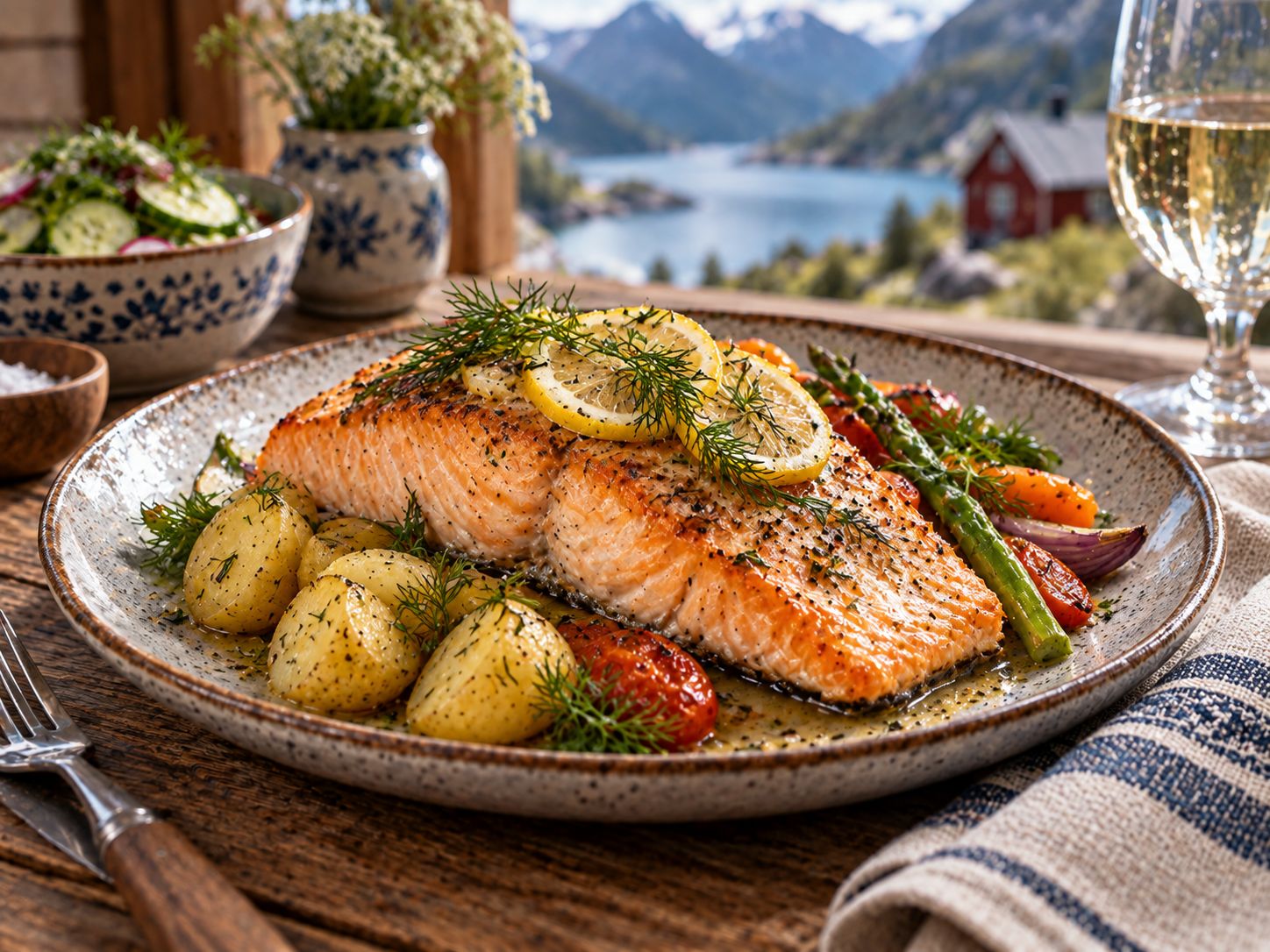
Ingredients
Equipment
Method
PREPARE THE OVEN AND POTATOES
- Preheat the oven to 200°C (400°F) conventional, or 180°C (355°F) fan. Line a rimmed baking sheet or baking dish with parchment paper. Bring a medium saucepan of water to a boil for the potatoes.
- Put 700 g scrubbed potatoes into the boiling water with 1 tsp salt. Reduce to a gentle boil and cook 15–20 minutes, depending on size, until a knife slips through the center without resistance. Drain and keep warm. The potatoes can cook while the salmon bakes.
SEASON AND BAKE THE SALMON
- In a small bowl, combine 1 tbsp Dijon mustard, 1 tbsp lemon juice, 1 tsp finely grated lemon zest, 2 tbsp chopped fresh dill, 1 tbsp olive oil, 1/2 tsp fine salt and 1/4 tsp black pepper. Stir until evenly combined.
- Pat the four salmon fillets dry with paper towels and check for pin bones. Arrange on the lined baking sheet with a little space between portions. Spread the glaze over the top of each fillet. Do not leave fish at room temperature unnecessarily.
- Bake for about 12–18 minutes for 150–175 g portions, depending on fillet thickness and oven. Check the thickest part with an instant-read thermometer: the conservative food-safety target is 63°C (145°F). If not there yet, continue baking in 2-minute intervals; avoid relying solely on the clock. The salmon should separate into flakes when gently pressed.
SERVE
- Divide the warm potatoes among four plates, add one baked salmon fillet to each and serve with lemon wedges. Spoon any clean pan juices over the fish if desired. Serve immediately.
Notes
Recipe style: A Norwegian-inspired preparation pairing Atlantic salmon with dill, lemon and boiled potatoes. Recipes vary by household; this is not presented as a singular traditional Norwegian dish.
Salmon: Use four similarly sized fillets, approximately 150–175 g each. Baking time varies mainly by thickness; a thinner piece may cook sooner. Keep refrigerated until use, and thaw frozen fish safely in the refrigerator before cooking.
Temperature and time: Oven 200°C (400°F) conventional or 180°C (355°F) fan. Cook salmon about 12–18 minutes; cook potatoes about 15–20 minutes simultaneously. Prep 20 minutes plus up to 25 minutes cooking, approximately 45 minutes total. The 25-minute allowance includes bringing potatoes back to a boil and individual variation; timing is an estimate, not a substitute for checking doneness.
Food safety: A conservative endpoint for fish is 63°C (145°F) measured at the thickest point. Keep cooked fish separate from utensils or surfaces that contacted raw fish. Fish is an allergen; Dijon mustard is also a mustard allergen. Check mustard ingredients where dietary restrictions apply.
Lemon accounting: The single whole lemon in the serving group supplies the measured juice and zest used in the glaze, with any remaining lemon cut into serving wedges. If a small lemon does not supply 1 tbsp juice and sufficient wedges, use an additional lemon as needed.
Nutrition: Intentionally blank: salmon fat content, actual edible portion weight, product brands, and salt retained by potatoes have not been verified.